

Why You’ll Love Grilled Peaches
What if the best dessert of the summer didn’t require turning on your oven or your stove?
When peaches hit their peak, they don’t need much help. A scoop of peach ice cream or a peach fruit crisp is certainly delicious, but there’s another way to enjoy summer’s sweetest fruit — one that takes less than 10 minutes and might just surprise you.
Grill them.
Heat transforms an already juicy peach into something even more extraordinary. Natural sugars caramelize, the fruit turns warm and tender, and every bite tastes sweeter and more intensely peachy than before. Whether you’re cooking outdoors or using a cast iron grill pan in your kitchen, grilled peaches are one of the easiest — and most impressive — summer desserts you can make.
If you’ve never grilled fruit before, peaches are the perfect place to start.
What Happens When You Grill a Peach?
A peach already carries plenty of natural sugar. When that sugar meets the heat of a grill, it caramelizes, creating rich, toasty flavors that a fresh peach simply doesn’t have.
At the same time, a little moisture evaporates, concentrating the fruit’s flavor while softening the flesh. The result: a peach that’s warm, juicy, and wonderfully tender, yet still holds its shape.
Here’s something that might surprise you: perfect grill marks aren’t the goal. Perfect caramelization is. Those beautiful stripes may look impressive, but golden-brown caramelization is what delivers the incredible flavor.
You don’t have to be a grill master to make amazing grilled peaches. You just need ripe fruit, a hot grill, and the confidence to give it a try.
Choosing the Right Peach
Success starts at the grocery store or farmers market.
Look for peaches that are firm-ripe. They should give just slightly when you press near the stem, but they shouldn’t feel soft or mushy. Overripe peaches work beautifully in smoothies or baking, but they tend to fall apart on the grill.
And don’t judge a peach by its color. That rosy red color may catch your eye, but it’s not the best indicator of ripeness. The blush simply develops where the fruit was exposed to the sun. Instead, look at the peach’s background color beneath the blush.
As a peach ripens, the green undertones fade to a creamy yellow or golden hue (or a creamy ivory in white peaches). Pair that warm background color with a sweet aroma and a slight give near the stem, and you’ve likely found a peach that’s perfectly ripe and ready for the grill.
Yellow peaches have a brighter, slightly tangy flavor that pairs beautifully with the smoky char of the grill. White peaches have a more delicate, floral flavor with less acidity.
Whichever variety you choose (or is available to you), firm-ripe peaches will give you the best texture on the grill.
How To Pit Freestone or Clingstone Peaches
Pitting a peach is the one step that stops people before they even get to the grill, but it doesn’t have to. The technique you use depends on which type of peach you have. Freestone and clingstone describe how easily the pit separates from the flesh, not how sweet the peach is. So once you’ve got the bead on which type you have, pitting is a breeze.
Pitting a Freestone Peach
Freestone peaches release the pit easily, sometimes falling right out once the fruit is halved. These are the best peaches for grilling because pitting these peaches are super easy.
- Find the natural seam running from the stem end to the blossom end and cut along it, all the way around the peach, down to the pit.
- Place both hands on the peach and twist the two halves in opposite directions, like opening a jar.
- The halves should separate cleanly, leaving the pit sitting in one side. Lift it out with your fingers, or nudge it loose with the tip of a spoon or paring knife.
Pitting a Clingstone Peach
Clingstone peaches hold tightly to the pit and take real patience and a sharper technique to prep. Clingstone peaches need a slightly different approach since the flesh won’t release from the pit in two clean halves. Instead of halving, cut around the pit:
- Stand the peach on its blossom end and angle your knife about 45 degrees across it and slice downwards, much like you would cut a mango.
- Rotate the peach and repeat the cut on the other side.
- Then cut the two smaller sections left on either side of the peach.
- You’ll end up with two thick wedges and two smaller slices instead of two neat halves. That’s completely fine for grilling: the extra cut edges actually pick up more caramelization which means more flavor. And it’s better than ending up with a mangled peach from trying to wrangle the pit free.
- A dedicated peach or avocado pitter can also help lever stubborn pits loose.
How to Tell Which Type You Have Before You Buy
Peaches aren’t usually labeled freestone or clingstone at the grocery store or farmers market, but a couple of clues can point you in the right direction:
- Timing is the biggest tell. Early-season peaches (typically May and June) are most often clingstone. By mid-to-late August, most commercially available peaches are freestone.
- Ask the grower. At a farmers market, the farmer usually knows exactly what’s in season and can tell you on the spot.
A few well-known varieties by type, if you’re shopping at a farm stand that labels them or growing your own:
Common freestone varieties: Redhaven, Elberta, Cresthaven, Contender, Glohaven, and Loring.
Common clingstone varieties: Flordaking, Garnet Beauty, Halford, June Gold, and Ruby Prince.
Keep in mind these are general guidelines, not guarantees — growing conditions and ripeness can shift how easily any peach releases its pit.
A Peach with Ancient Roots
Peaches have delighted people for more than 4,000 years.
They originated in China, where they became symbols of longevity, prosperity, and good fortune. From there, peaches traveled west along the Silk Road to Persia, where European explorers first encountered them. In fact, the peach’s scientific name, Prunus persica, still reflects the old, mistaken belief that the fruit originated in Persia.
The Romans carried peaches throughout Europe, and Spanish explorers introduced them to North America in the 1500s.
Thousands of years later, we’re still discovering delicious new ways to enjoy them.
Today, peaches flourish across much of the United States. California grows the largest crop, while South Carolina, Georgia (famous for being the “Peach State”), New Jersey, Maryland and several other states also produce exceptional peaches each summer. Even in Texas peaches from Camp and Parker Counties are celebrated for their sweetness and flavor.
Why Peaches Are Good for You
Peaches don’t just taste like summer — they’re good for you, too.
One medium peach delivers only about 60 calories, making it a naturally light dessert option. It’s an excellent source of vitamin C, which supports immune health and collagen production, plus vitamin A, an important nutrient for healthy vision and skin.
Peaches also contribute:
- Dietary fiber for digestive health
- Potassium to support healthy blood pressure
- Antioxidants that help protect cells from everyday damage
- Plenty of water, making them wonderfully refreshing on hot summer days
Grilling doesn’t add significant fat or calories, so you end up with a dessert that feels indulgent while staying fresh, colorful, and nourishing.
Tips for Perfect Grilled Peaches
A few simple techniques set you up for success every time.
- Choose peaches that are ripe but still firm enough to hold their shape. Lightly brush the cut side with a neutral, high-heat oil such as avocado oil, and skip the butter and sugar before grilling — butter burns quickly, and sugar can scorch before the peach has a chance to caramelize naturally.
- Preheat your grill or cast iron grill pan over medium-high heat. Place the peaches cut-side down first, and then — this is the hardest part — leave them alone.
- Resist the urge to move or peek underneath them every few seconds. Peaches will naturally release from the grill once caramelization is complete.
- One of my favorite indoor methods uses a cast iron grill pan — you get beautiful grill marks and excellent caramelization without ever stepping outside or sweating over a hot grill.
Beyond Ice Cream
Grilled peaches are wonderfully versatile. They’re delicious with vanilla ice cream, of course, but don’t stop there. Try them with:
- Bourbon sauce
- French toast
- Goat cheese salad
- Whole-milk greek yogurt and granola
- Grilled flank steak
- Kale salad
- Pound cake
- Ricotta cheese and honey
- Vegetable tart
They’re also surprisingly good alongside grilled pork chops, roasted chicken, or a summer charcuterie board. Once you realize peaches belong on the grill, you’ll start finding reasons to add them to meals all season long.
Frequently Asked Questions
Do I need to peel peaches before grilling?
No. The skin holds the fruit together on the grill and softens beautifully with the heat, so there’s no need to peel. Just halve, pit, and go.
Can I grill peaches that are still a little firm?
Yes — firm-ripe is actually ideal. Peaches that are slightly underripe hold their shape better on the grates and still caramelize well, though the flavor won’t be quite as sweet as a fully ripe peach.
What if my peaches are overripe?
Grill them anyway, just handle them gently. Use a well-oiled grill pan instead of open grates, and expect a softer result — perfect for spooning over ice cream rather than plating whole.
Can I use frozen peaches?
Fresh is best for grilling. Frozen peaches release too much water as they thaw, which steams the fruit instead of caramelizing it. Save frozen peaches for smoothies or baking, and save the grill for fresh, in-season fruit.
What if I don’t have a grill?
A cast iron grill pan on the stovetop gets you the same caramelization and beautiful grill marks, no propane or charcoal required. You can also pan-sear the peaches in a tiny bit of oil. Just follow the same heat and timing instructions. You’ll won’t get the grill marks, but it will be ever bit as delicious.
How do I know when a grilled peach is done?
Look for deep golden-brown color where the fruit meets the heat, and let the peach release from the grill on its own — that’s your sign the caramelization is complete.
Can I make grilled peaches ahead of time?
They’re best served warm, right off the grill, but you can grill them up to a few hours ahead and serve at room temperature. Avoid refrigerating if possible — the cold dulls the caramelized flavor.
Bring It to the Table
Grilled peaches prove that some of the best cooking happens when we’re willing to try something unexpected.
They’re simple enough for a weeknight, elegant enough for company, and delicious enough to remind us that the freshest ingredients often need the least amount of fuss.
So the next time you bring home a basket of summer peaches, skip the oven. Fire up the grill instead.
You might just discover your new favorite way to celebrate peach season — and another reason to cook fearlessly.
*As an Amazon Associate I earn from qualifying purchases.*
PrintGrilled Peaches: The Sweetest Thing You’ll Put on Your Grill All Summer
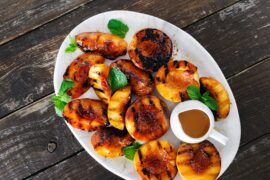
Ripe peaches meet a hot grill for one of the simplest, most impressive desserts of summer. In under 15 minutes, natural sugars caramelize into a warm, tender bite that’s delicious on its own or dressed up with bourbon sauce.
- Prep Time: 5 minutes
- Cook Time: 7 minutes
- Total Time: 12 minutes
- Yield: 4 servings 1x
Ingredients
- 4 ripe, but firm peaches, halved and pitted
- avocado oil (or other neutral, high-heat oil)
Instructions
- Preheat your grill or cast iron pan on medium-high heat, aiming for 350˚ to 400˚F.
- Lightly brush the cut side of each peach with avocado oil.
- Place the peach halves cut-side down on the grill and leave them undisturbed.
- Flip to the uncut side once the peaches release naturally from the grill and show a deep golden-brown caramelization, and grill just until warmed through.
- Remove the peaches from the grill.
- Garnish with a bourbon sauce or your own favorite topping.
Notes
- Freestone peaches make for the easiest prep because the pit releases easily.
- See the notes in the post above about how to pit a clingstone peach.
- No grill? Use a cast iron grill pan or a heavy skillet to caramelize your peaches.
Nutrition
- Serving Size:
- Calories: 81
- Sugar: 12.9 g
- Sodium: 0 mg
- Fat: 2.7 g
- Saturated Fat: 0.3 g
- Trans Fat: 0 g
- Carbohydrates: 14.7 g
- Fiber: 2.3 g
- Protein: 1.4 g
- Cholesterol: 0 mg


Top 10 Fruits and Vegetables for Weeknight Cooking
You can make a delicious meal any night of the week with a handful of fresh vegetables and fruits. Get Chef Sandra Lewis' Top 10 Vegetables and Fruits for Weeknight Cooking. Subscribe to our email list below or text COOK to 66866.
You have Successfully Subscribed!
We never, ever share your information.